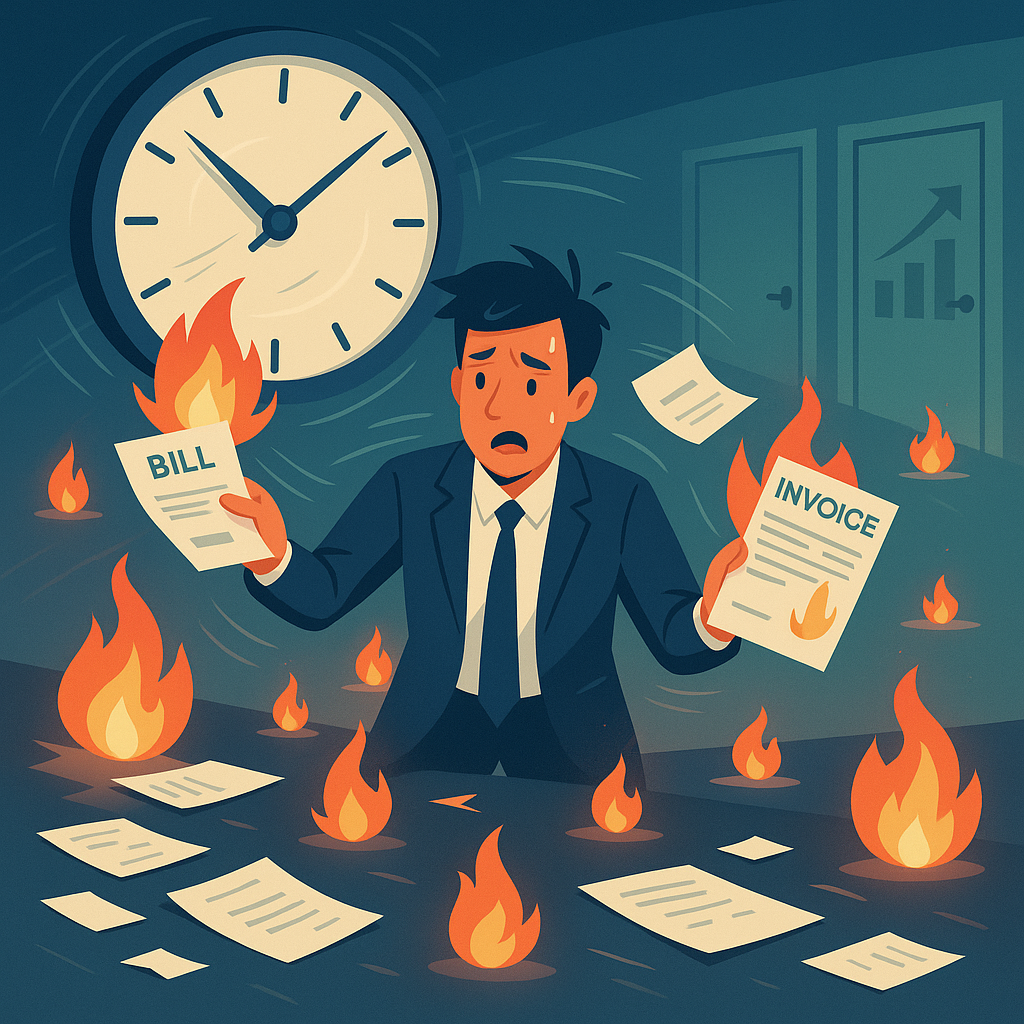
If you think managing your business finances should take a few hours each month, you’re not wrong. However, many business owners discover they’re spending far more time on financial tasks than they ever planned. The difference between efficient financial management and constant firefighting can determine whether you focus on growth or get trapped in daily damage control.
At many businesses, we see business owners who intended to spend their time on strategy, sales, and leadership but find themselves constantly pulled into financial emergencies. They often don’t realize how much time they’re losing until they track where their hours actually go. This post breaks down the hidden time drain that poor financial systems create and shows you what efficient financial management looks like.
The Daily Interruption Cycle
Poor financial systems don’t just create problems–they create constant interruptions that fragment your day and destroy productivity. Every unplanned financial task pulls you away from leadership activities that actually grow your business.
Common daily interruptions include:
Hunting for receipts or invoices when questions arise
Manually tracking down payment status for overdue accounts
Reconciling discrepancies between different systems or reports
Fielding questions from employees about expense approvals or budget limits
These interruptions might seem small individually, but they accumulate into significant time waste. Each interruption doesn’t just cost the time to handle the immediate issue–it also costs the time to refocus on your original task.
Emergency Mode: The Productivity Killer
When your financial systems aren’t working properly, you operate in constant emergency mode. Problems that should be prevented instead require immediate attention, often at the worst possible times.
Examples include:
Discovering cash flow problems when you need to make payroll
Scrambling to find documentation during tax season
Realizing budget overruns only after major damage is done
Dealing with vendor payment issues that could affect critical supplies
Emergency mode creates productivity loss beyond the immediate crisis. It trains you to be reactive instead of strategic, making it harder to focus on long-term planning and growth initiatives.
The Real Cost of Financial Firefighting
Time management becomes impossible when you’re constantly fighting financial fires. These urgent tasks always feel important, but they rarely move your business forward. Meanwhile, the activities that actually create value–developing strategy, building relationships, improving operations–get pushed aside.
Consider the opportunity cost. Every hour spent on preventable financial tasks is an hour not spent on:
Building strategic partnerships that could expand your market
Developing new products or services that increase revenue
Training team members to improve efficiency and quality
Planning improvements that reduce costs or increase margins
The hidden time drain from poor financial management often costs more than the direct financial impact of the problems themselves.
What Efficient Financial Management Looks Like
When your financial systems work properly, routine tasks happen automatically or require minimal oversight. You receive the information you need when you need it, without having to hunt for it or piece it together from multiple sources.
Examples include:
Automated reports that highlight exceptions requiring attention
Clear approval workflows that prevent spending surprises
Regular reconciliation processes that catch errors quickly
Predictable cash flow reporting that supports planning
Efficient systems don’t eliminate all financial management tasks, but they make them predictable and manageable. You can schedule time for financial review instead of being constantly interrupted by financial emergencies.
Breaking Free from the Time Trap
The solution starts with recognizing that time spent on financial firefighting isn’t productive business owner activity–it’s a symptom of systems that need improvement.
Evaluate your current processes:
Track Your Time: For one week, log every financial interruption and emergency. You might be surprised by the total hours involved.
Identify Patterns: Look for recurring problems that could be prevented with better systems or processes.
Calculate the Cost: Multiply your time investment by your hourly value to understand the true cost of inefficient financial management.
Plan for Prevention: Focus on fixing root causes rather than just handling symptoms.
The cost of improving your financial systems is almost always less than the ongoing cost of financial firefighting. Better systems free up your time for activities that actually grow your business.
At Fusion Accounting and Technology, we see this pattern regularly. Business owners often resist investing in better financial systems because they seem expensive, but they don’t calculate the hidden costs of their current approach.
Don’t let financial firefighting trap you in reactive mode. Your time should be spent on leadership and growth, not constant crisis management. The difference between efficient financial management and expensive firefighting often determines whether your business grows or just survives.
Have questions about making your financial systems work more efficiently?
Let’s help you reclaim your time for what matters most to your business.